Our Heritage
A house of weavers
Four generations, nine clusters, one belief: that a saree should outlive the hands that made it — and honour them.
IThe Belief
We have never asked a weaver to go faster. A Banarasi from our looms takes as long as the silk, the zari and the hands require — and is finished on the reverse as carefully as on its face. That is the whole of our method.
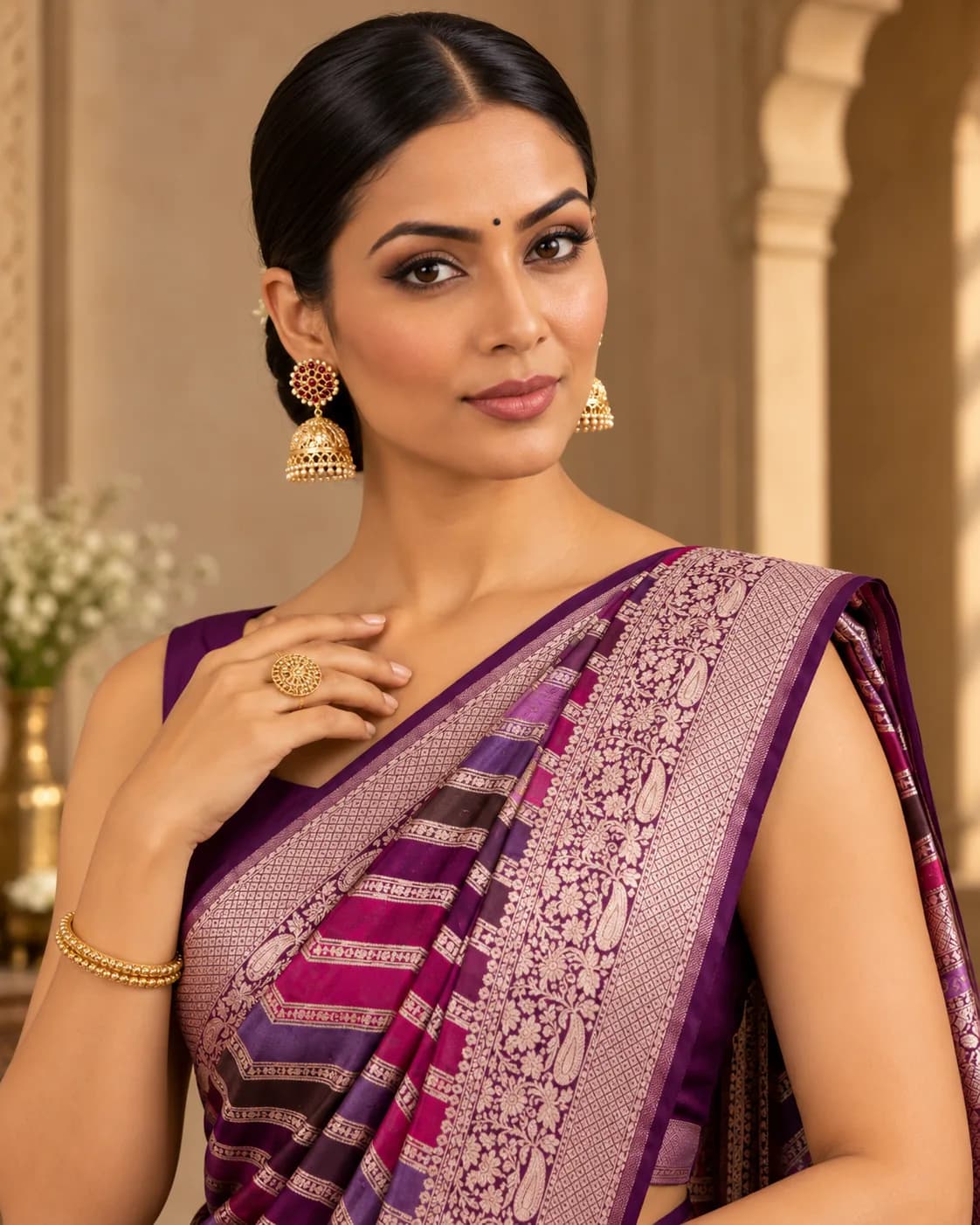
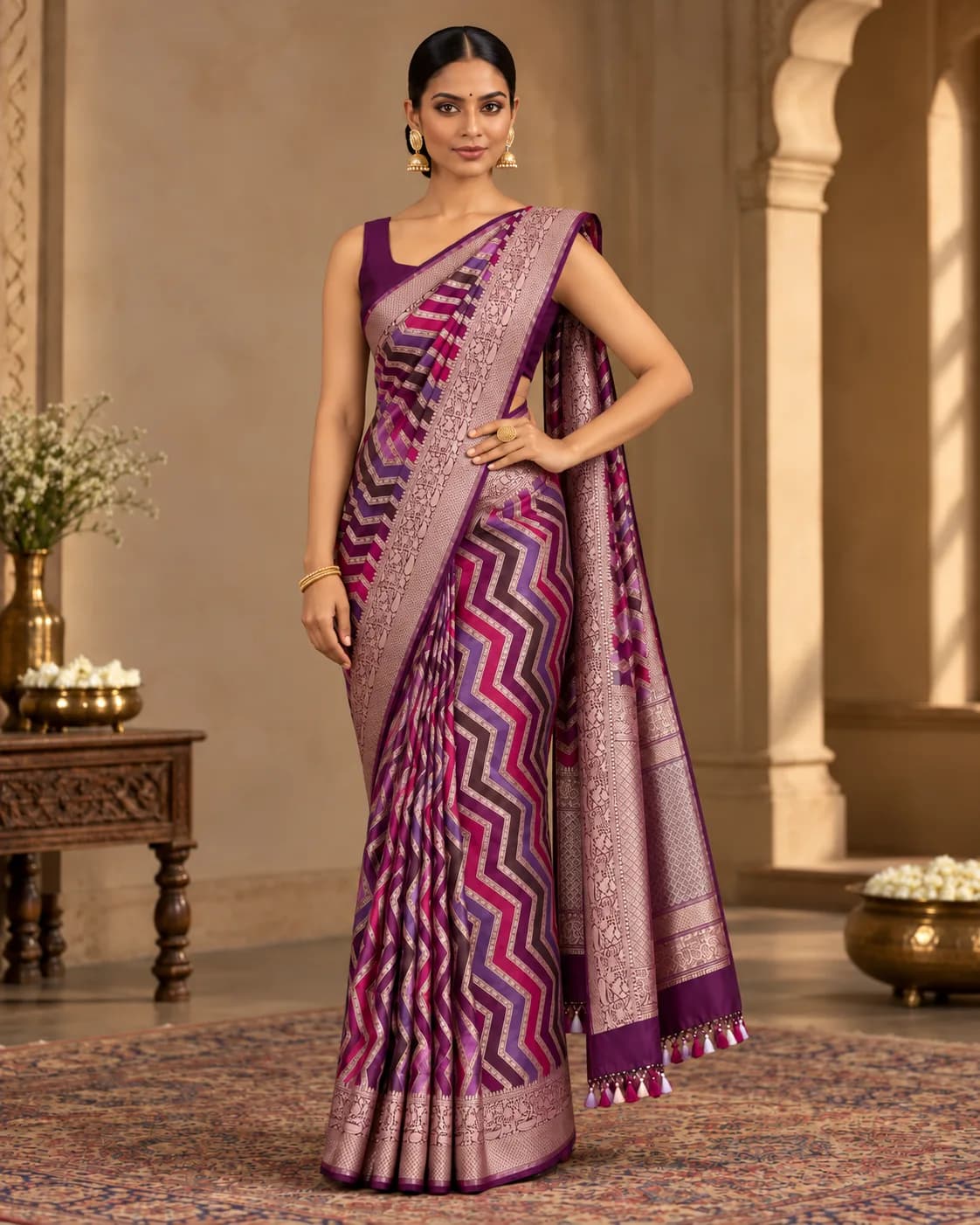
A bridal pallu on the loom in Madanpura, two months into its making.
IIThe Lineage
- 1932
Our founder, a zari merchant in Varanasi, commissions his first bridal Banarasi for a family in Lucknow.
- 1968
The house opens its own looms in Madanpura, keeping kadhwa alive when power looms swept the city.
- 1994
A second atelier in Kanchipuram brings korvai Kanjeevaram into the family.
- 2011
The archive is formally catalogued — 1,400 textiles, the oldest from 1840 — and Heritage Revival begins.
- Today
212 weavers across nine clusters, each paid by the hour, never by the piece — so no saree is ever hurried.
IIIThe Craft
From thread to heirloom
IThe Thread
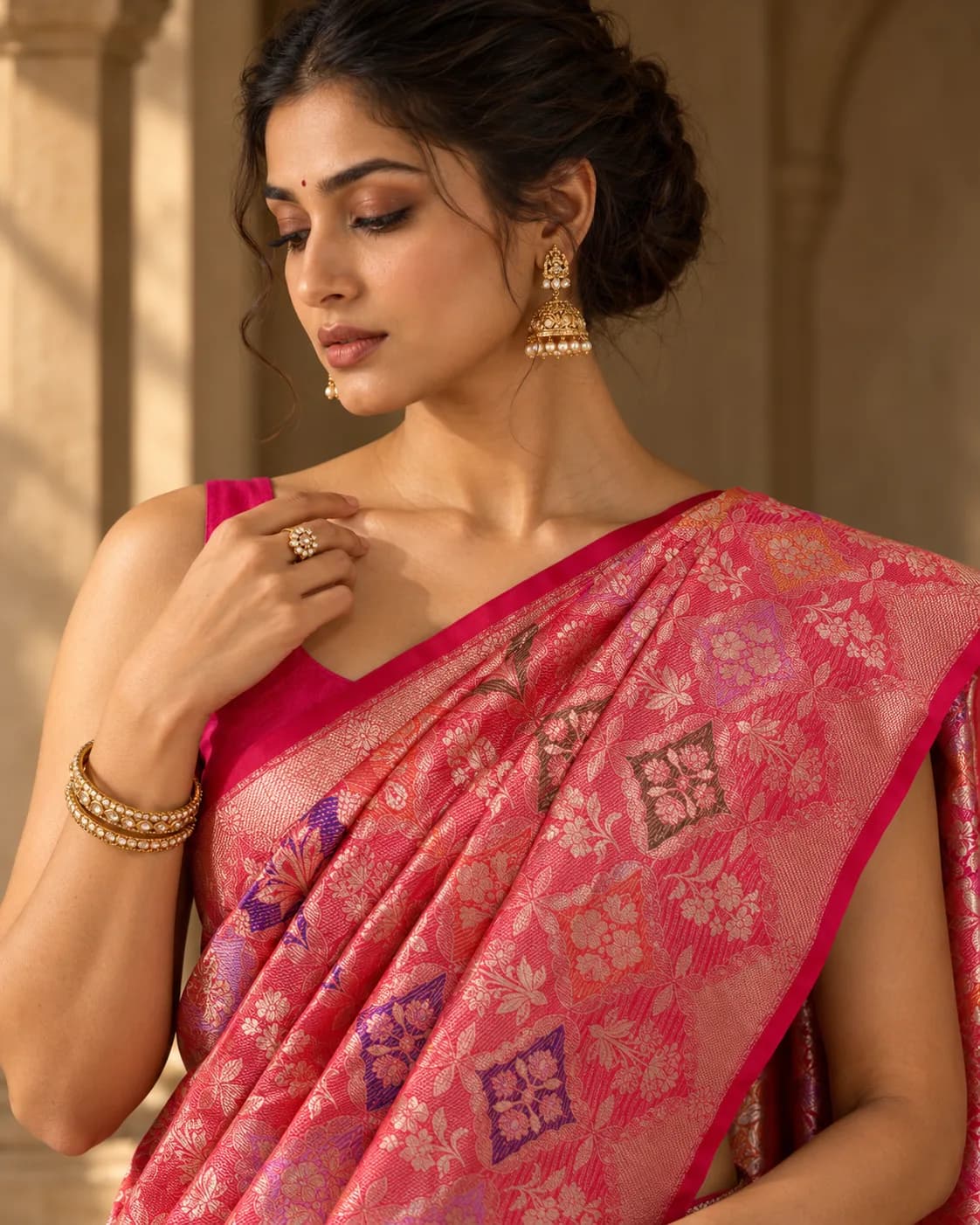
It begins with mulberry silk reeled in Karnataka and zari drawn from pure silver — wound, gilded and checked by hand before a single pass is woven.
IIThe Graph
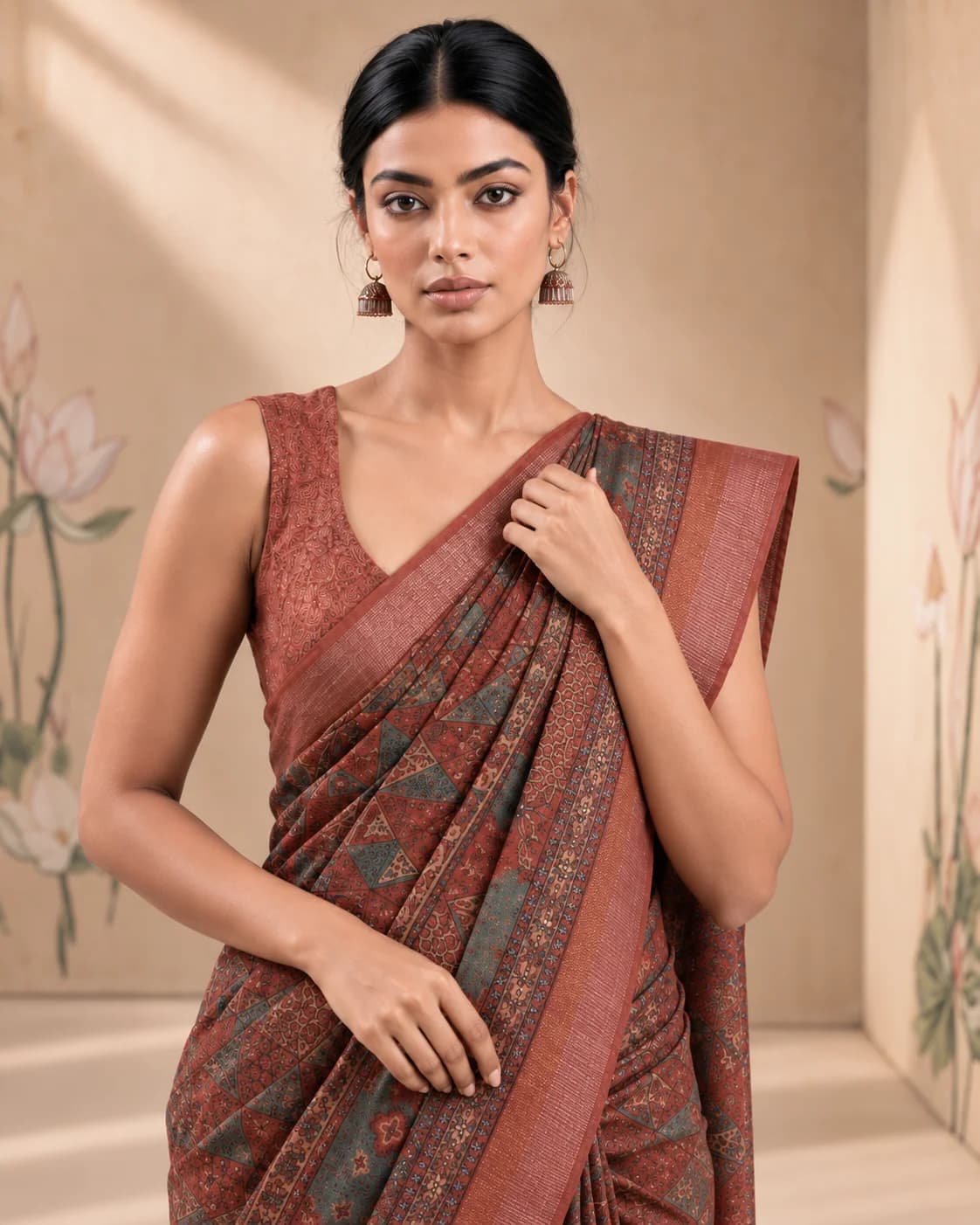
Our naqshaband translates every motif onto graph paper, one square to one thread. A bridal pallu can run to forty thousand squares.
IIIThe Loom
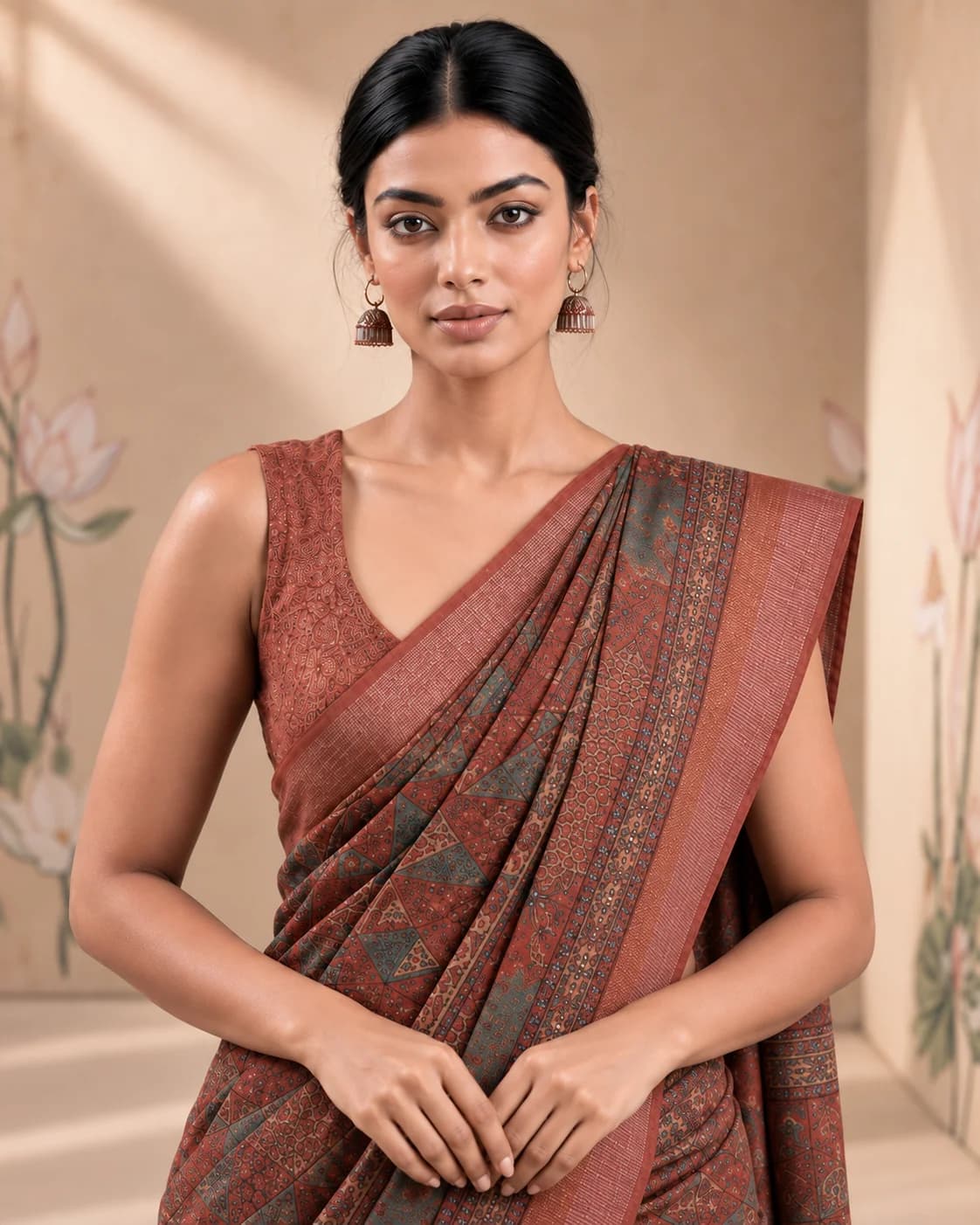
On pit looms in Varanasi and Kanchipuram, master weavers work in pairs — a few inches a day, never more than the silk allows.
IVThe Legacy
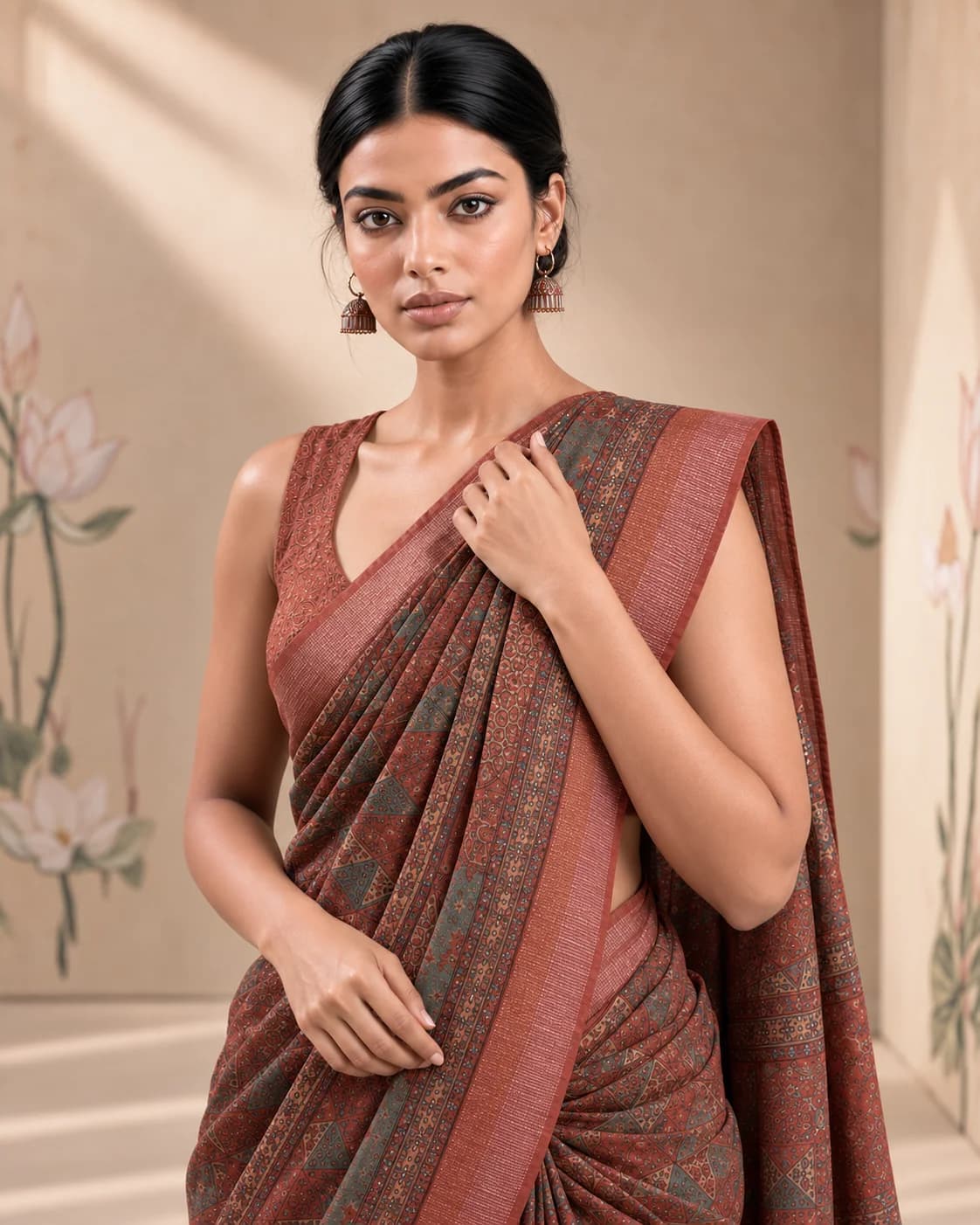
Finished, signed at the selvedge, folded in muslin. A saree made this way is not bought so much as received — and, one day, passed on.
- Master weavers
- 212
- Weaving clusters
- 9
- Hours in a single bridal saree
- 2,880
- Of each couture piece, ever
- 1